Freshwater gear forgives a lot of laziness. Salt doesn’t. A reel can come off a saltwater trip looking fine and go into storage looking fine while the salt keeps working on it the whole time, because corrosion is an electrochemical process and it doesn’t need you watching. That’s why rinsing, drying, looking things over and following the manufacturer’s maintenance matter a lot more than they do for gear that only ever sees fresh water.
Salt keeps working after you leave
Oxidation is what eats exposed metal, and the salt ions in seawater speed it up in a way plain fresh water just doesn’t. So salt on your gear isn’t sitting there politely waiting to be wiped off. It keeps going after everything’s out of the water and looks dry.
Reel internals and hardware take the worst of it, since residue can stay trapped in there after a rinse that only hit the outside.
Rinse with the right water
Splashing gear with more salt water doesn’t get the salt off, and leaving it unrinsed between uses just gives the salt more time. Over a multi-day stretch, either habit can leave things worse than you found them.
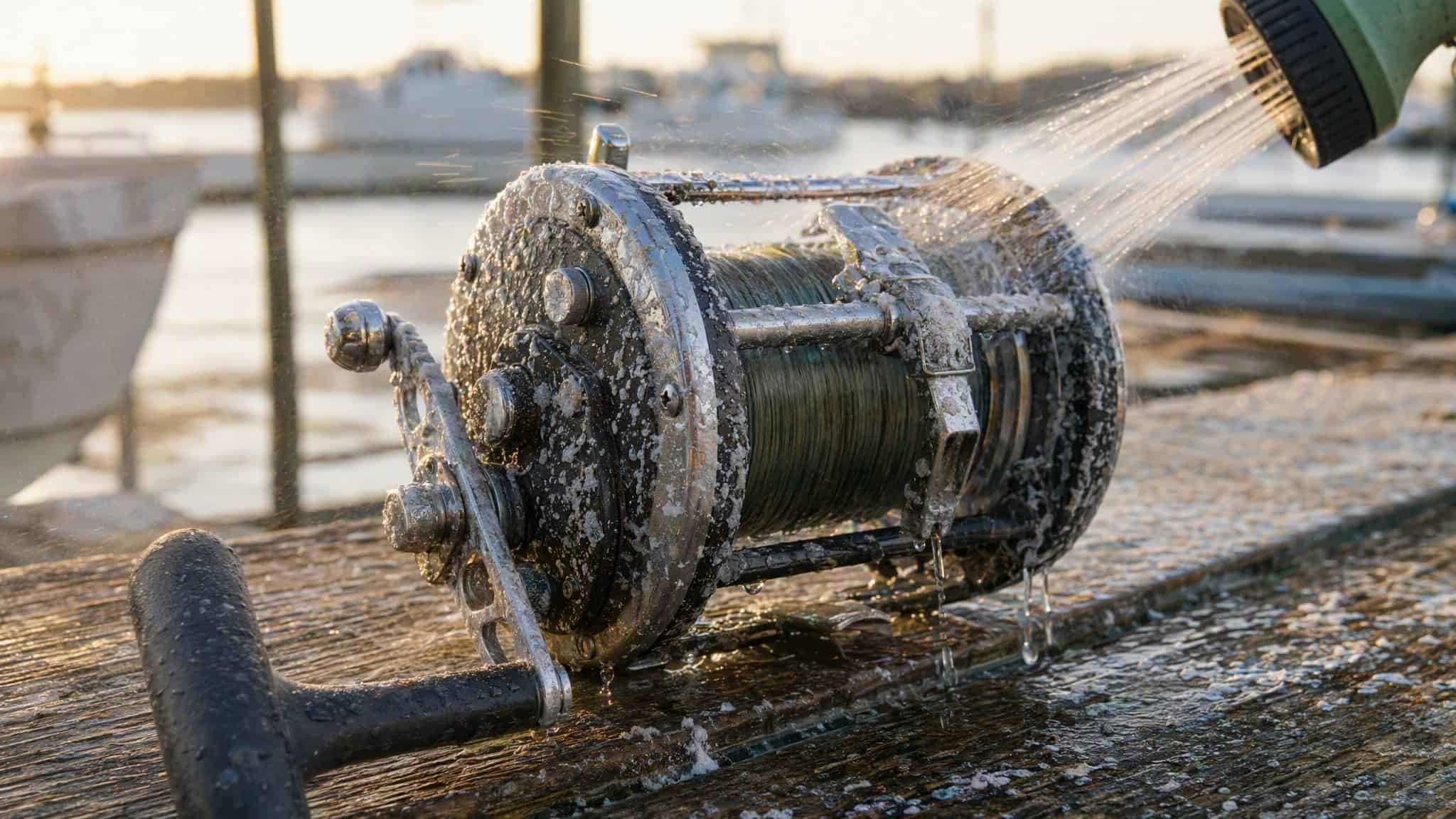
Use whatever freshwater-cleaning method is specified for that piece of equipment. For reels, manufacturers commonly recommend a gentle rinse or a fresh-water wipe instead of high-pressure spray or dunking, because forcing water past seals or washing lubricant out trades one problem for another. Rod guides and exposed hardware can be rinsed and dried according to their own care instructions.
Before you grab a screwdriver
Salt and water can get into spool areas, bearings, moving parts and other spots that need maintenance. That doesn’t mean every reel should be opened up by its owner after a day on salt.
Shimano’s current guidance, for example, recommends a freshwater external rinse, proper drying and model-specific lubrication, and it warns against unnecessary disassembly of many reels. Deeper service belongs with the manual or an authorized service route. Other manufacturers and reel designs can differ.
So the rule really is model by model: get the salt off promptly, dry the reel properly, look it over, and follow the service interval and disassembly instructions for that exact reel. An outside rinse isn’t automatically enough, and a full do-it-yourself breakdown isn’t automatically the responsible move either.
Taking your reel to the coast for the first time can make it feel like you just signed up to rebuild it every night. For a lot of reels that isn’t the job, and on plenty of models the manufacturer would honestly rather you didn’t. Get the salt off, get it dry, and let the manual decide how far in you go.
When two metals touch
Different metals touching each other in salt water can speed up corrosion. That’s galvanic action, a documented electrochemical effect, not something somebody made up on a dock.
Stainless steel and other saltwater-appropriate hardware exist as a real engineering answer to that, not just a label doing marketing work. Mix incompatible metal hardware on saltwater gear and it can corrode faster than either material would on its own, which is a decent reason to think twice before clipping on whatever random swivel is rattling around the bottom of the tackle box.
Drying
Corrosion needs moisture to keep going, and gear stored wet keeps handing it moisture even after a proper freshwater rinse.
Drying gear all the way before long-term storage — not a quick towel-off — meaningfully extends its life compared with shoving damp equipment into a rod locker or the garage until next time.
The bill shows up later
Corrosion damage rarely makes a scene. You find out when a reel that used to run smooth starts grinding, or when line keeps fraying and the culprit turns out to be a groove worn into a guide. Sometimes hardware just seizes and won’t budge.
By the time something visibly fails, corrosion, salt crystals, wear or contamination may have been building out of sight for a while. Regular post-trip maintenance cuts down on avoidable salt problems, but no fixed number of minutes or promised extra service life applies across reels, rods, guides and hardware. If somebody hands you one, be suspicious.
Where this stops being general
How much maintenance your gear needs depends on the specific gear, what it’s made of and how often it sees salt. Where the manufacturer has maintenance guidance for a reel or anything else, that’s the version to follow.

Whether your setup is still the same setup next trip comes down partly to what you did with it the night you got home. Gear systems puts corrosion next to line, drag and hardware, since on the water they all fail as one chain anyway.
Maintenance source: Shimano — Reel Maintenance. Follow the manual for the exact reel; cleaning pressure, lubrication points, disassembly and service intervals vary by design.