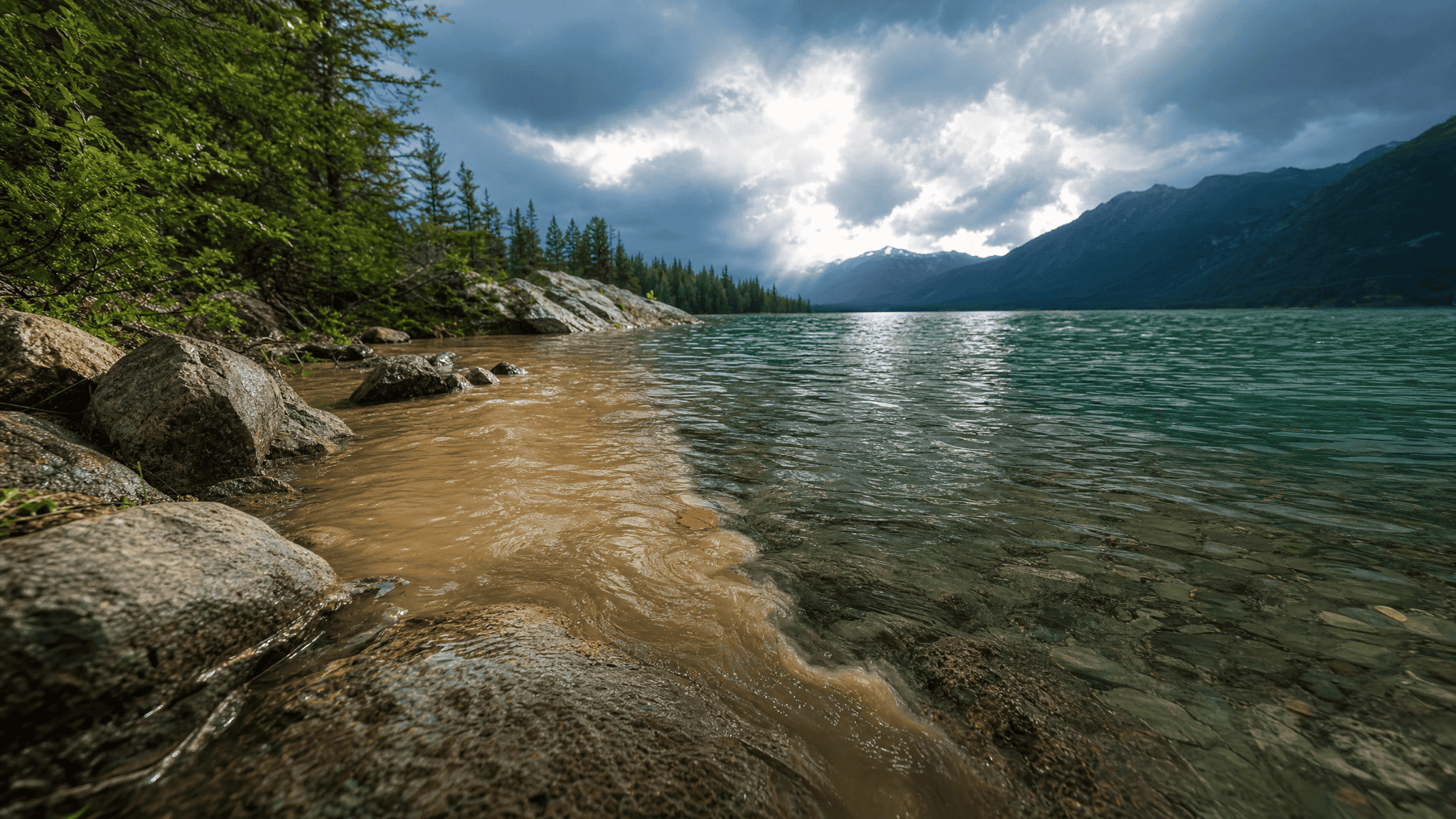
A storm blows through overnight, the lake looks like chocolate milk in the morning, and the first move almost everybody makes — me included, for a long time — is digging through the box for something bigger and louder before looking at what the rain actually did. That’s confidence standing in for information.
Rain isn’t one change. It’s four, and they show up at different times and pull in different directions.
Color’s the obvious one, but it rarely spreads evenly. It’s coming in from somewhere, so look for where. Level matters more than it looks: a foot of new water floods a bank that was dry yesterday and gives fish somewhere to go that nobody’s fished. Flow is the most reliable thing rain produces, so a creek that’s pushing when it wasn’t before is worth walking to. Temperature can go either way. Cold rain on warm water and warm rain on cold water do different things, and in summer a cold inflow can be the best water in the lake while in early spring it can shut a whole arm down.
Find where the before and after meet
That’s where I start — location and presentation, not lure. You’re hunting a transition: clear water meeting stain, current meeting slack, flooded brush meeting the old bank line, a calm pocket next to a bank that just got windy. Seams like that beat featureless water on a normal day, and after rain they matter even more, because that’s literally where the before and after are touching.
The one worth finding first is the mudline, the visible edge where dirty inflow meets the clearer main body. Bait gets disoriented crossing it, and predators sit on the clean side where they can still see. It’s about as close as weather ever gets to marking a spot for you.
How much rain changes the answer
An hour of light rain on a big lake is mostly a surface event: softer light, a little chop, fish sliding shallower, not much else. A night of hard rain on a small water or a river hands you a different place in the morning. Size the response to the size of the change, because a lot of the time the real answer is that not much moved.
Then, and only then, the tackle
Once you know what changed, the tackle change has something to answer to. In stained water the fish gets less time and less information to decide, so contrast, vibration and a slower bait that stays in front of it longer start earning their place. If the level’s the bigger change, rising or dropping water has its own set of moves.
Plenty of mornings, though, the lure already tied on is fine. It just needs a different angle, a different depth, or a bank that wasn’t underwater yesterday.