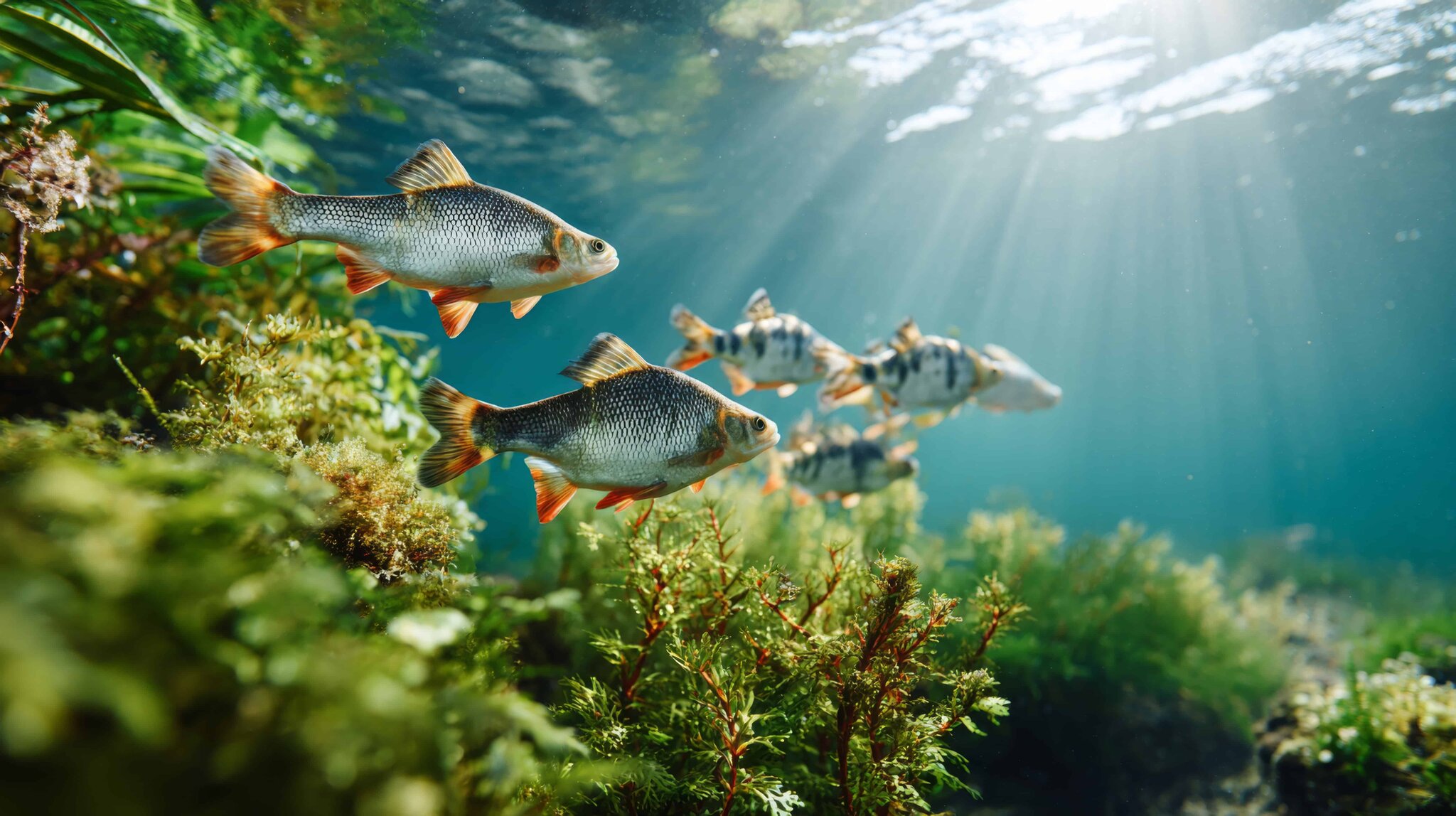
A mussel shell. A wad of grass. One crayfish claw hanging off a jig by a thread. A clean bite-off, or a hook packed solid with black muck that smells like a drainage ditch.
All of it looks like a detour from the fishing. Sometimes that’s exactly what it is. Sometimes it’s the first honest thing the water has told you all morning, and you’re about to flick it into the weeds without looking at it.
The trap is turning one odd event into a grand unified theory. The useful move is smaller: what had to be true for this to come back from here?
Where the surprise came from
Before you touch the tackle box, remember the cast. Near the bank? On the first drop? Over the deepest part of the retrieve, beside current, right after the lure hit bottom? Where it happened usually tells you more than what it was.
A tiny perch on a bait meant for bass says small forage is using that area. A crayfish on a jig says the lure found a bottom that can hold crayfish — it doesn’t say every predator in the neighborhood is eating them, however much you’d like it to. A clump of healthy green vegetation confirms depth and cover. A strand of rotten weed says you’re dragging through dying material, where oxygen and fish use might be nothing like the lush edge ten feet over.
Write down the part that’s actually information: depth, bottom, cover, current, light, or where in the retrieve it happened. “Caught something weird” is a story you tell in the truck. “Snagged fresh cabbage in eight feet at the outside edge” is something you can fish next week.
Bycatch redraws the food map
Unexpected species get treated as an interruption to the plan, which is too simple. Fish share water for reasons — food, temperature, current relief, structure, seasonal movement, or one of them following another.
Start catching small panfish while you’re after predators, and look at their size and where they’re sitting, whether that’s a weed edge or suspended over a break. The predators don’t have to be present for that to be worth knowing. You’ve just found out where the potential forage is comfortable under today’s conditions.
Rivers work the same. A species you didn’t expect in a seam tells you something about velocity and depth there. That’s not permission to make a claim about the whole species from one fish. It means the seam deserves another look.
The hook brings back a sample
Everything the lure traveled through can leave something on it, and some of it comes home with you. Sand, silt, shell, gravel dust, vegetation, bark, insect cases, filamentous algae — each one points at a different bottom or cover condition. Fouling the same way over and over means you’re reaching a layer you can’t see from where you’re standing.
There’s a practical payoff. If every cast returns with soft debris packed around the hook, a bottom-dragging presentation is a poor fit even when the depth looks right, and something riding a little higher will stay clean and keep fishing. Keep collecting fresh weeds at one distance and not another, and you may have found an edge worth tracing rather than punching through blindly.
Damage counts
Sometimes the catch is a bent hook, a frayed leader, a clipped tail, a scraped lure, or line that suddenly feels rough between your fingers. Look at it before you tie the same thing back on and repeat the whole experiment.
Fraying near the lure can come from rock, wood, shell, teeth, or a guide that’s gone bad. A clean bite-off is a different problem than line gone fuzzy over several inches. A hook point rolled over after repeated contact means the presentation is spending more time in hard stuff than you thought it was.
Don’t force a verdict. You may never know whether that abrasion was sharp mussel shells where they occur, sharp rock, or one unseen object down there. You do know the line is compromised and the area is hard on tackle, and that’s already enough to change the leader, the angle, or how often you check.
Answer it small
The biggest mistake is treating one strange event as a license to rebuild the entire setup. Make one change that tests the clue.
If the forage showed up near the weed edge, run several deliberate passes along it. Hit a harder bottom patch? Change the angle and see whether the contact repeats. And when the small fish keep coming from one depth, hold that depth for a few casts before you start swapping colors and weights and spots all at once.
Nothing gets proven in one cast. The point is that the next cast knows a little more than the last one did.
Sometimes weird is just weird
Fishing rewards pattern-seeking, which is also how anglers turn two coincidences into a law of nature. A feather on the hook doesn’t reveal a hidden hatch. One small northern pike in a bay doesn’t mean the lake’s predator population has reorganized itself. A beer can mostly proves that somebody upstream of you failed at stewardship.
Use repetition as the filter. Does the same bottom material keep showing up? Do the unexpected fish keep coming from one depth, or does the lure only foul in one lane? Repeated observations deserve more weight than a single strange event.
What a good day is actually made of
A good day isn’t only a stack of target fish. It’s a day where the water got less anonymous than it was at eight in the morning.
And the strange thing that turns out to mean nothing still wasn’t a total loss. Looking at it for thirty seconds before it went into the weeds was thirty seconds spent learning the bottom.


