People call the North Umpqua the graduate school of fly fishing. In 2023, Oregon canceled the summer steelhead class. Both of those things are true, and if you’re planning around the first one you’d better know about the second. The reputation is built on wild summer steelhead, technical wading and fly-only canyon water that can humble somebody who’s fished everywhere else. The question worth asking now is whether that reputation still matches the fishery and the rules you’d actually walk into.
FIELD PLATE · CURRENT
Read the speed change before the spot.
Thirty-one miles from Steamboat Creek down to Rock Creek
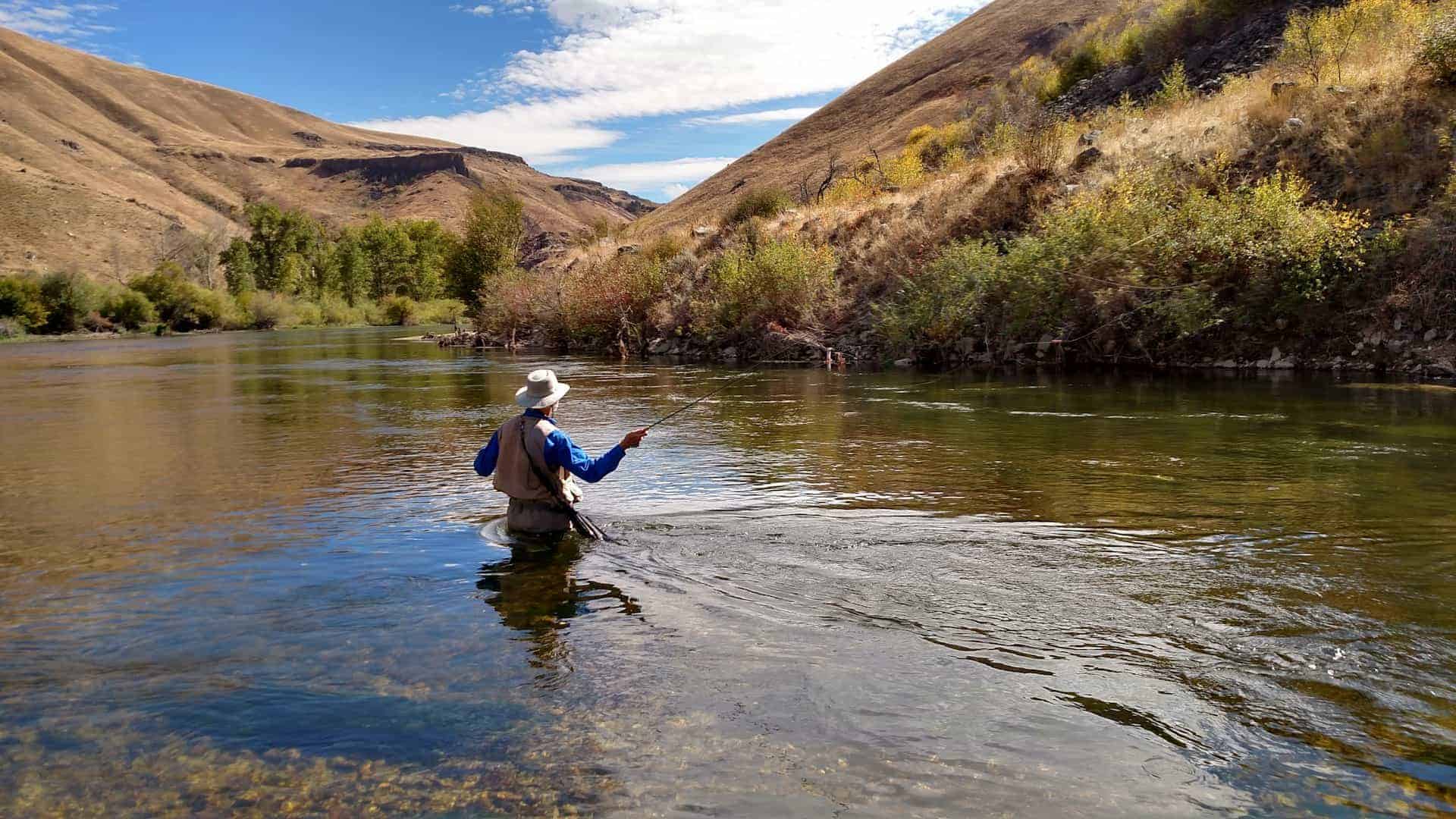
The famous section runs roughly 31 miles of canyon water, from just above Steamboat Creek down to near Rock Creek, and the whole length is designated fly-fishing only. Barbless hooks are required. All wild steelhead have to be released. Fishing from any type of watercraft is prohibited through the entire stretch, so it’s wading and bank access end to end — you earn every run with your boots.
Downstream, a different rulebook
Below that, particularly between Winchester Dam and Rock Creek, conventional fishing methods are permitted, and that section often puts up the highest harvest numbers on the river. People who know the North Umpqua only by its fly-only reputation sometimes assume those rules cover the whole river. They don’t. That’s a boundary to read carefully in the current Oregon Department of Fish and Wildlife regulations before you rig up, not something to pick up from a magazine article.
Paying for the footing
Slick boulders, unpredictable currents and wading lines where one missed step means a full dunking get reported on this river over and over. I haven’t waded this canyon myself, so that part is secondhand, but it’s what you’d expect from steep canyon steelhead water, and it’s a big part of why so many visiting anglers hire a local guide instead of learning the runs solo on a first trip.
If “graduate school” makes it sound like you need some kind of diploma just to show up, you don’t. Paying somebody who already knows where the footing goes bad is a smart way to learn a hard river, and nobody’s keeping score on how you got there.
The run sets the calendar
Summer steelhead start showing up in the fly water in June. Fishing picks up through July and holds into November. Winter steelheading runs from late January through mid-April and leans on the weather a lot more than the summer fishery does. Spring Chinook are in the river April through October, but the fly-fishing-only section is closed to Chinook fishing specifically — being in the river doesn’t make them legal to target there.
Oregon closed this fishery in 2023
That year Oregon shut down the North Umpqua’s summer steelhead fishery entirely because of poor adult returns — only the second time that had happened since the state started regulating the river. Second time ever, and it was three years ago.
Meanwhile, warming conditions have been reported to help non-native species like smallmouth bass spread in nearby Oregon coastal rivers while hurting coldwater natives like steelhead. A reputation built decades ago doesn’t account for any of that. Steelhead runs live on a thin enough margin that a good year shouldn’t be taken for granted, so check the current return status before every trip, not just the first one.
Before you pack
Read the current ODFW regulations for the exact section you plan to fish, and look up how this year’s returns are tracking. Field Sense Navigator has the North Umpqua as a named public water, with same-day access and conditions, which beats finding out at the trailhead.