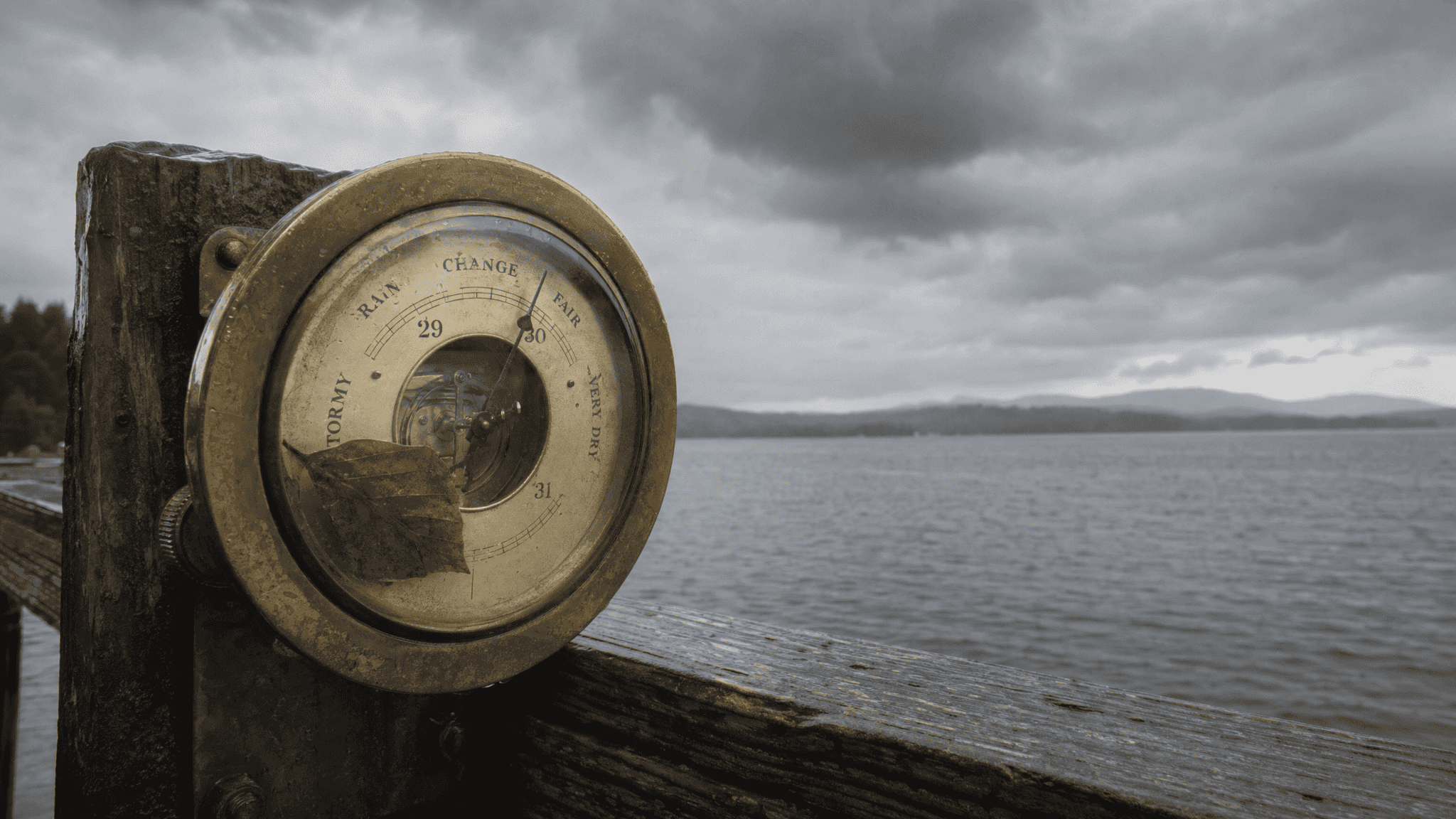
An inch of mercury is a big move on a barometer, the kind of swing a serious front brings. It’s also about the same pressure as a foot and change of water. So the entire pressure change from that front is less, at the fish, than what it goes through swimming up two feet, which it does all day long without any visible crisis.
That number is what got me to stop treating a falling line on my pressure app like a starting gun. Graph dropping, fish are supposed to go nuts, right? Then a skunked falling-pressure day would make me want to blame the barometer for lying, when it never promised anything in the first place.
It doesn’t prove pressure is meaningless. Fish with swim bladders are sensitive to small changes, and there’s real research on that. But it does make me suspicious of any explanation where the pressure itself is doing the heavy lifting, because the size of the change just isn’t there.
What’s riding in with it
A front rarely shows up alone. It drags wind, cloud cover, a temperature swing, changing light and sometimes runoff along with it, and each of those does something you can actually see and act on.
- Wind moves plankton, then bait, then predators, and stacks them on one bank. That’s a location change you can go stand in front of.
- Cloud cover lowers light, which usually lets fish move shallower and farther from cover, because the ambush advantage stretches further out.
- Temperature changes how active fish are and where the comfortable water sits.
- Runoff changes clarity and flow, which changes both how fish find food and where they hold.
Any of those explains a good or bad day better than the gauge does, and unlike the gauge, each one hands you an obvious next move.
The bluebird-day version
The classic story says fishing dies after a front passes. Pressure’s high and stable then, sure. The sky’s also bright and cloudless, the wind’s dead, and with no chop breaking up the light the water feels clearer than it did yesterday. That pushes fish tight to cover and makes them harder to approach. It’s a fishable problem with fishable answers — go deeper, tighter, smaller, earlier — and none of them came from the barometer.
I still write it down
One line in the log, not the headline. If the same pressure pattern keeps lining up with the same kind of day across a bunch of comparable trips, that’s worth testing on purpose instead of trusting a coincidence. A one-variable field test isolates the thing you actually suspect instead of a whole weather system at once, and it only works if the prediction gets written down before the trip.
If the pattern holds up, great. If it doesn’t, you’ve spent one line of ink per trip finding out.