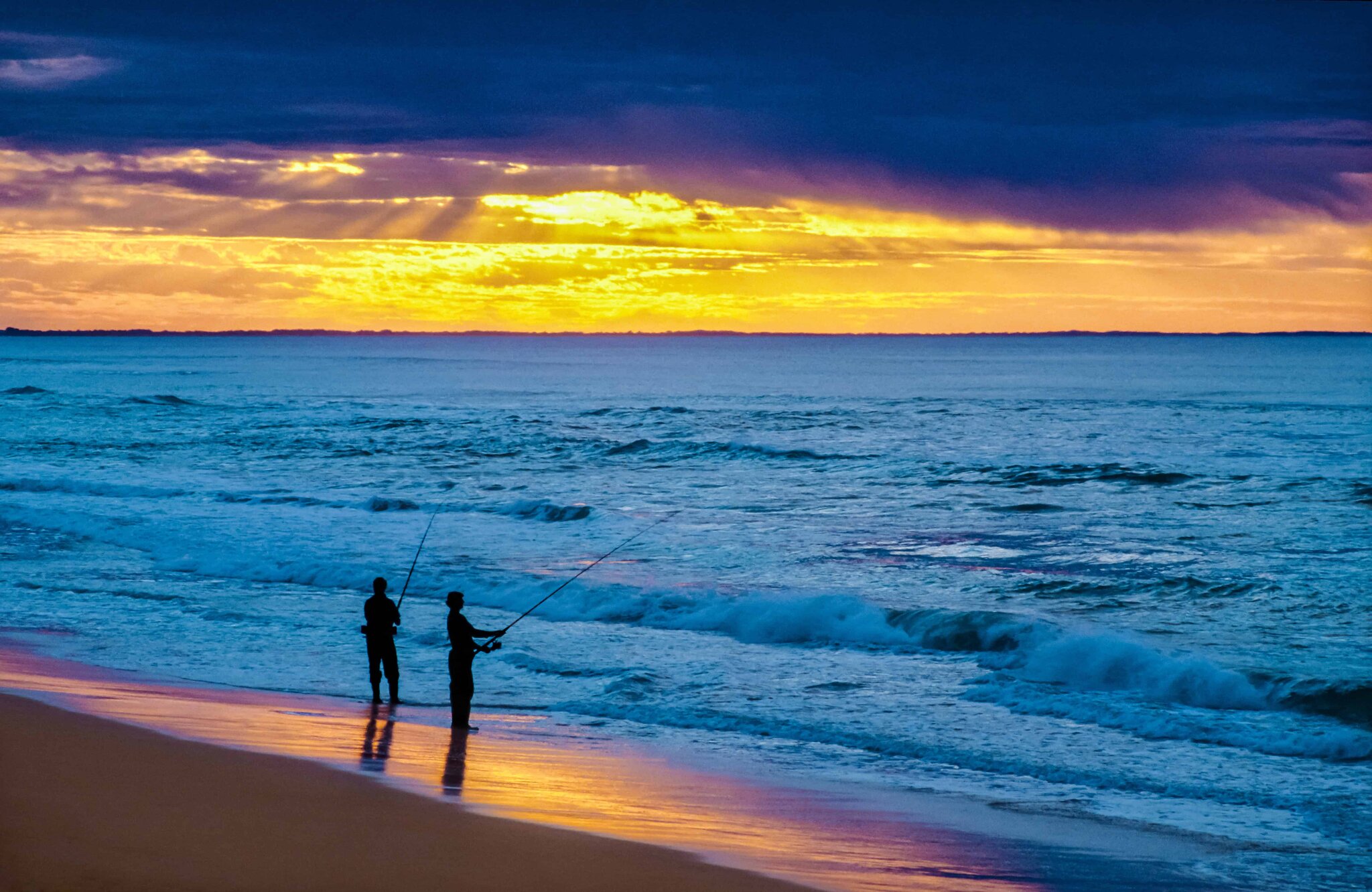
Nobody struggles with not launching into an obvious gale. The hard call is the day that’s already going — fish eating, gas already burned, the truck a long walk back up the trail, and the sky starting to do something you don’t like but can’t quite name yet.
DECISION PLATE · STOP
Decide the stop before you are standing in it.
That call is a lot easier if it already got made in the driveway. Decide what ends the trip before the truck moves, so you aren’t negotiating with the weather, the water and the route home while all three get worse.
Before you leave
Check the forecast, watches and warnings, radar if it helps, the marine forecast where it applies, river or reservoir information, fire restrictions and closure notices. Conditions in the nearest town can look nothing like conditions on exposed water, in a canyon, in the mountains or out on a big reservoir. And a forecast is planning information, not a guarantee, so keep watching once you’re out there.
Thunder
If you can hear thunder, lightning is already close enough to be a hazard. The National Weather Service says to get to substantial shelter and wait 30 minutes after the last thunder before going back out. Open water, an exposed bank, isolated high ground and a lone tree are all bad places to wait out the end of a bite.
Wind, and then waves, which are a different number
Wind that’s just annoying from a protected bank can be dangerous in a small boat or a kayak a long way from the launch. What matters is the boat, the shoreline, the temperature, who’s with you and how far the run home is. Set a conservative limit for the boat and whoever’s running it, gusts and direction included. A tailwind on the way out is a headwind coming home, and you’ll be more tired for that half.
Waves do their own math. Fetch, shoreline shape, current, boat traffic and wind blowing against current can build hazardous water while the wind number in the app still looks fine. Watch the boat instead: is it taking water, losing steering, pounding, asking for more skill than the people aboard can safely give it? Turn for home while control still feels comfortable, not after the margin’s gone.
The way out can wash away
Rain upstream, dam releases, tides, snowmelt, flash floods and reservoir operations can raise the water with zero drama where you’re standing. Crossings, gravel bars, shore paths and low banks go under without warning. If the way out depends on one of those, watch whatever controls it and leave before the route turns into a question you’re answering under pressure.
Cold water doesn’t care what the air is doing
Cold-water immersion takes away movement and judgment fast, and a warm afternoon says nothing about how a capsize or a fall would go. Wear flotation and clothing suited to the water, not the air, and follow the boating safety guidance that applies. If the trip doesn’t have a real cold-water margin, change the plan before you launch or wade.
Heat and cold both spend the walk out
Sun, humidity, glare bouncing up off the water, not enough to drink and a long hike add up to real heat illness risk. Plan water, shade, clothing and trip length around current public-health guidance, and stop while there’s enough left for the walk, the paddle or the drive. The fishing spot doesn’t get all of it.
Cold is quieter. Wind, wet clothes, standing still and the evening temperature slide get you without ever feeling extreme. Shivering, hands that quit working and confusion mean act now, not one more hour. Bring layers and dry protection, and end it before knots, footing or boat handling suffer. Fingers usually go first, and a clinch knot you can’t finish is a pretty honest thermometer.
When you can’t see
Fog, smoke, snow, heavy rain, darkness and blowing dust tend to take the shoreline, other boats, hazards, markers and the route back all at once. Use the required navigation equipment and lights, and don’t let a screen talk you into thinking low visibility is safe. If you can’t keep a reliable picture of where you are and what’s around you, stop fishing and navigate.
Fire closes more than the water
Fire can close roads, forests, boat ramps, campgrounds and evacuation routes, and smoke brings health and visibility problems on top of that. Follow agency closures and evacuation instructions right away, on their timeline, not yours. An access that looks open isn’t permission to enter a closed area.
Ice
Ice strength depends on thickness, ice type, current, springs, snow cover, temperature history and local conditions, so there isn’t one number to carry around in your head. Follow current local guidance, and never assume a spot is safe because it was safe last time. No reliable local information, or anything that looks even a little questionable, means you don’t walk out on it.
A dead bilge pump counts as weather
The sky doesn’t have to change for the margin to disappear. A dead bilge pump, a burned-out navigation light, a damaged paddle, a lost anchor, a motor that won’t start, torn rain gear or a phone at zero can eat it just as fast. Judge conditions by the equipment that still works, not the equipment you left the ramp with.
The margin belongs to whoever has the least of it
Kids, beginners, older companions, anyone with mobility limits, anybody cold, tired, seasick, overheated or scared — they set the turnaround, not the toughest person in the boat. One person being able to keep going doesn’t make the group safe.
Agree before you leave that anyone can call it and nobody has to defend it afterward. That matters most for the quiet one in the back who’s freezing and doesn’t want to be the reason everybody went in. Somebody asking “we good?” out loud every so often makes it a lot easier for them to say no.
Sunk cost isn’t a weather instrument
Guide fees, four hours of driving, a campsite already paid for, a rare day off, a bite that finally switched on — none of it lowers the waves, clears the smoke or fixes the road out. It just makes leaving feel expensive. The threshold after a long drive should be the same one you’d use fifteen minutes from home. It usually isn’t, which is exactly why it’s worth setting before the drive.
Write the triggers down
Before you go, name the hazards that actually apply to this trip and what ends it: lightning, a wind or wave condition matched to the boat you’re in, rising water, heat, cold, lost visibility, a fire closure, bad ice, a gear failure, or losing a safe way back. Use official guidance and conservative judgment instead of one universal number. A limit that fits a drift boat on a river doesn’t fit a float tube on a reservoir, and pretending it does is how people talk themselves into staying too long.
Then go when one of them shows up, while the route out is still simple — not twenty minutes later, when it isn’t.
Safety sources: National Weather Service — Lightning Safety · USGS — Storm Runoff and Streamflow.